
Job Loss and Identity: What Ubuntu Teaches Us About Recovery

The call ends. The screen goes dark. And the house, which was completely normal thirty seconds ago, feels like a different place now.
Most people describe the first hour after a job loss the same way: not tears, not anger, but a strange, cotton-wrapped quiet. The refrigerator hums. Someone outside laughs at something. You sit with the particular horror of realizing that the world has not noticed what just happened to you.
That feeling is not weakness. It is not a bad attitude or a failure of resilience. It is your nervous system doing exactly what it was built to do when something load-bearing disappears without warning. Your amygdala fires. Cortisol floods the system. The part of your brain responsible for strategic thinking, clear decisions, and confident action goes offline. You are not falling apart. You are responding normally to something genuinely destabilizing.
Western culture has one answer for this moment: get back up. Update the resume. Hit the network. Move fast before the gap in your employment history gets uncomfortable to explain. It is advice delivered with the best intentions and almost no understanding of what is actually happening inside the person receiving it.
There is a different way to think about recovery. It comes from a different place entirely.
Why It Hits Harder Here
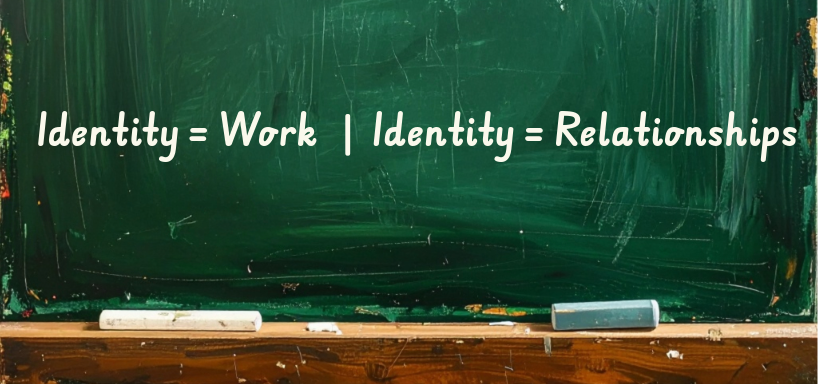
In the United States, work is not just what you do. It is the answer to the first question anyone asks you at a party. It is the thing that organizes your day, your relationships, your sense of forward motion. Lose it, and you don't just lose a paycheck. You lose the story you've been telling about yourself.
That's not true everywhere. In many parts of the world, identity doesn't live so completely inside the job title. Who you are is understood through your relationships, your community, the people who know your name and your history. Your value is not something you prove through output. It already exists, held by the people around you.
In a culture built on independence, that idea can sound almost radical. We are taught that needing others is a vulnerability, that the goal is self-sufficiency, that asking for help during a crisis is something you do quietly and briefly before getting back to the business of handling it yourself.
Which is exactly why job loss hits so hard here, and why the standard advice misses so completely. You can't think your way out of a trauma response. You can't network your way back to a sense of self. And you absolutely cannot do it alone, even though every piece of conventional career wisdom implies that you should.
What Ubuntu Actually Means
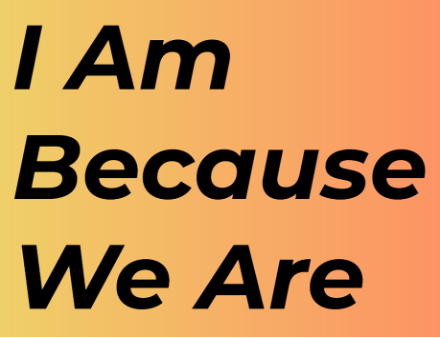
Ubuntu is a word from the Nguni Bantu languages of southern Africa. It doesn't translate cleanly into English, which is part of why it matters. The closest version is something like: I am because we are.
Not I am, therefore I think. Not I am, therefore I produce. I am because we are. Your existence, your dignity, your wholeness: none of it is something you generate alone. It emerges through other people. Through being seen, known, and accompanied. Through the particular thing that happens when someone sits with you in a hard moment and doesn't try to fix it.
This is not a soft idea. It is a fundamentally different account of what a human being is and what human beings need to survive difficulty. Communities shaped by Ubuntu don't respond to someone's crisis by handing them a checklist. They close the distance. They show up. The healing happens between people, not inside one person working on themselves in isolation.
You may have never heard this word before. But if you have ever gotten through something genuinely hard, you probably already know what it describes. You know the friend who called at the right moment. The colleague who said "me too" when you finally told the truth about how you were doing. The stranger in an online group who wrote exactly what you had been feeling but couldn't name.
That is Ubuntu. It was already there. It just didn't have a word.
Three Ways Ubuntu Reframes Job Loss

From Alone to Together
The first thing most people do after losing a job is pull inward. Cancel plans. Stop answering the phone. Tell themselves they'll reconnect once they have something good to report, once the situation has resolved, once they have a decent answer to the question everyone will ask.
That instinct is completely understandable. It is also the condition in which shame grows fastest.
Left alone with a dysregulated nervous system and no external signal that you are still valued, still known, still part of something, the brain starts filling the silence with its own story. And that story is rarely kind or accurate.
Ubuntu doesn't ask you to perform wellness you don't feel. It asks something simpler and harder: don't wait until you're better to let people in. Let people in as part of how you get better. The distinction sounds small. In practice, it changes everything about how recovery actually moves.
From Shame To Common Humanity
Shame about job loss is almost universal, and almost universally unspoken. It sits just underneath the careful professional language people use to describe what happened. "My position was eliminated." "The organization restructured." All true. All quietly carrying the same unspoken question: please don't think less of me.
Ubuntu insists on something that the research keeps confirming: job loss is not a personal verdict. It is an economic event, a systemic event, something that happens to people who are talented and committed and doing everything right. The hundreds of thousands of federal employees displaced in recent months did not lose their jobs because they failed. They lost them because of decisions made far above their pay grade by people who will never know their names.
Shame shrinks when an experience stops feeling singular. When you say what happened out loud to someone who says, "I know, me too," something loosens. The story shifts from "something is wrong with me" to "something hard happened to us." That shift is not denial. It is a more accurate account of what actually occurred.
From Loss To Becoming
This is the hardest one to sit with, and probably the most important.
Job loss is a real loss. The grief that follows it is appropriate and worth honoring. Ubuntu doesn't ask you to reframe pain into gratitude or treat displacement as a hidden opportunity. That kind of forced optimism is its own harm, and people in genuine distress can smell it from a mile away.
What Ubuntu offers instead is something more honest: who you are is not contained in what you had. Identity doesn't live in a job title. It lives in relationships, in what you know and carry, in how you show up for the people around you. None of that disappeared when the call ended.
The question Ubuntu invites is not "how do I get back what I lost?" It is slower and more worthwhile to ask: who am I becoming through this, and who is becoming it alongside me? You can't answer that alone. It requires other people to reflect back what they see, to hold the parts of you that you've temporarily lost sight of. That is not a weakness in the model. It is the whole point.
What Unbroken Is Built On

There is no single word in English for what Unbroken is trying to do. But Ubuntu comes close.
When Aimee Mitchell built this platform, she wasn't thinking about African philosophy. She was thinking about what she had learned from thirty years as a trauma specialist, and from her own experience of being knocked sideways by job loss despite knowing exactly what was happening to her neurologically. She was thinking about what actually helps people get through something genuinely hard, rather than what looks like help from a distance.
What actually helps is not a better resume template. It is not another framework for optimizing your LinkedIn profile. It is the experience of being seen clearly by people who understand what you are carrying, and who are carrying something similar themselves. It is regulation before strategy. Community before tactics. Honesty before performance.
That is what the research supports. It is also what displaced workers say, again and again, when you ask them what made the difference. Not the advice. The accompaniment.
Unbroken is built on that premise. The nervous system regulation tools, the group coaching, the curriculum that starts with stabilization before it ever touches career strategy: all of it is designed around the understanding that you cannot think your way through a trauma response, and that you were never meant to do this alone.
You are not broken. You are between things, in the company of people who know exactly what that feels like.
Frequently Asked Questions
What does Ubuntu mean?
Ubuntu is a word from the Nguni Bantu languages of southern Africa. It translates roughly as "I am because we are." The idea is that human identity and dignity don't exist in isolation. They emerge through relationships, through being seen and known by others. Ubuntu describes a way of life in which your well-being is understood to be inseparable from that of the people around you.
What does "I am because we are" mean?
"I am because we are" is the core expression of Ubuntu philosophy. It means that a person becomes fully human through connection with others, not through individual achievement or self-sufficiency. Your worth doesn't come from what you produce or accomplish. It exists in your relationships, your community, and how you show up for others.
Why does job loss feel like losing your identity?
In Western culture, work is deeply tied to how people understand themselves and how others see them. When a job ends, the daily structure, sense of purpose, professional relationships, and personal narrative built around that work all disappear at once. Research confirms that job loss disrupts not just financial security but psychological identity, social belonging, and sense of direction. The loss is real, not just practical.
What happens in the brain during job loss?
Job loss triggers a neurobiological stress response similar to other major life traumas. The amygdala activates, cortisol floods the system, and the prefrontal cortex, the part of the brain responsible for clear thinking, strategic planning, and confident decision-making, becomes impaired. This is why standard career advice often fails displaced workers. The brain is in survival mode, not problem-solving mode.
Why do people feel shame after losing a job?
Shame after job loss is common because Western culture treats employment as a measure of personal worth and effort. When a job ends, especially unexpectedly, people often interpret it as a personal failure rather than an economic or systemic event. That interpretation is rarely accurate. Most job losses, including mass layoffs in government, higher education, and nonprofits, result from organizational-level decisions that have nothing to do with individual performance.
How does community help with job loss recovery?
Isolation after job loss allows shame and dysregulation to deepen. Community interrupts that process. When displaced workers share their experience with others who understand it, shame shrinks, nervous systems begin to regulate, and identity starts to stabilize. Research consistently shows that social connection is one of the strongest protective factors during periods of major disruption. Recovery doesn't happen faster in isolation. It happens faster between people.
What is Ubuntu's approach to setbacks and failure?
Ubuntu treats difficulty as a shared human experience rather than a personal verdict. Where individualistic cultures frame setbacks as evidence of personal inadequacy, Ubuntu understands them as part of a common humanity that everyone navigates. Falling short, losing ground, needing support: these are not signs of weakness. They are conditions that call for community rather than withdrawal.
What is the Unbroken app, and who is it for?
Unbroken is a trauma-informed mobile app designed for displaced workers in government, higher education, nonprofits, and beyond. It combines the WHO's Problem Management Plus psychological intervention with Kim Paull's Flourish career coaching model and real-time nervous system regulation tools. It is built for people whose brains are in fight-or-flight mode and who need stabilization before they can strategize. It is a project of Places to Thrive, a registered nonprofit.
